

Axiom: Sound as Philosophy — Bill Laswell and the Art of Radical Collaboration

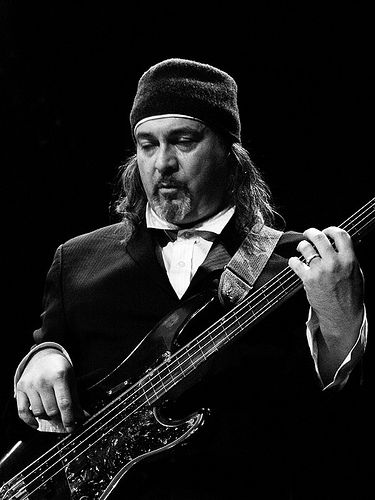

There are record labels, and then there are ideas masquerading as record labels. Axiom Records, founded by Bill Laswell in the early 1990s, belongs firmly in the latter category. More than a catalog of releases, Axiom was a deliberate experiment: a space where genre collapsed, geography dissolved, and sound itself became a philosophical inquiry.
Listening to Axiom today feels less like revisiting a label and more like opening a time capsule from an alternate musical universe—one where dub, jazz, ambient, metal, hip-hop, gnawa, and avant-garde composition were never separate in the first place.
Bill Laswell: The Architect Behind the Curtain
Bill Laswell has always functioned more as a sonic architect than a traditional producer or bassist. His résumé already defied categorization before Axiom existed—Herbie Hancock, Public Image Ltd., Material, Motörhead, Toshinori Kondo—but Axiom gave him something new: total curatorial control.
Under Axiom, Laswell wasn’t chasing hits or trends. He was building systems:
cross-cultural collaborations
rhythm as ritual
bass as gravitational force
studio as an instrument
Axiom records don’t ask for passive listening. They demand presence.
Axiom’s Core Aesthetic: Ritual, Bass, and Space
If there’s a unifying sound across Axiom releases, it’s this:
Low-frequency dominance — bass not as support, but as narrative
Dub methodology — space, delay, decay, negative space
Non-Western rhythmic logic — time as a circle, not a grid
Spiritual undercurrent — music as invocation, not entertainment
These albums often feel closer to ceremonies than performances.
Essential Axiom Releases (and Why They Matter)
Material – Hallucination Engine
A mission statement disguised as an album. African rhythms, Middle Eastern modes, funk, ambient, and dub all orbit a single idea: music without borders. Guests drift in and out like spirits rather than featured artists.
Tabla Beat Science – Tala Matrix
Bill Laswell, Zakir Hussain, Karsh Kale, Talvin Singh. This record predicted the future—and then refused to commercialize it. Deeply rhythmic, meditative, and impossibly modern even now.
Laswell / Tetsu Inoue – World Receiver
Minimal, abstract, and textural. This album treats sound like matter—granular, floating, colliding. It’s ambient music for people who don’t like ambient music.
Sacred System – Nagual Site
Dub reduced to its spiritual essence. This is temple music—slow, heavy, reverent. Basslines move like tectonic plates.
The Collaborators: Axiom as a Constellation
Axiom wasn’t about a stable roster—it was about temporary alignment. Musicians didn’t join Axiom; they passed through it.
Notable contributors include:
Pharoah Sanders
Bootsy Collins
Buckethead
Toshinori Kondo
Zakir Hussain
Jah Wobble
Nicky Skopelitis
Ryuichi Sakamoto
Talvin Singh
Liu Sola
What’s remarkable is how none of these artists sound like “guests.” Under Laswell’s direction, egos dissolve. The music becomes collective and anonymous—almost ritualistic.
Production as Philosophy
Axiom records are immaculately produced, but never glossy. The production choices feel ethical rather than aesthetic:
dynamics are preserved
silence is intentional
distortion is expressive
repetition is hypnotic
This is studio work that rewards high-quality playback systems, but more importantly, deep listening. These are records that reveal themselves slowly, over years.
A Starter Listening Path for Newcomers
Axiom can feel overwhelming at first—not because it’s difficult, but because it operates outside familiar genre markers. This listening path eases you in while revealing the label’s core ideas step by step.
Step 1: Start with Structure and Groove
Material – Hallucination EngineThis is the gateway record. It has recognizable rhythms, melodies, and collaborators while still introducing Axiom’s borderless philosophy. Listen for how styles coexist rather than compete.
Step 2: Enter the Rhythmic Core
Tabla Beat Science – Tala MatrixOnce your ears adjust, this album rewires your sense of time. Focus on how rhythm becomes melodic and how repetition turns hypnotic rather than static.
Step 3: Explore Space and Texture
Laswell / Tetsu Inoue – World ReceiverNow strip things back. This is where Axiom’s studio-as-instrument approach becomes clear. Listen late at night, quietly, and let the textures emerge gradually.
Step 4: Go Deep into the Ritual
Sacred System – Nagual SiteThis is the spiritual endpoint. Heavy, slow, and immersive. Don’t analyze it—inhabit it. Let the bass and echo do the work.
Optional Detours
Dub fans: Sacred System, Divination, Automaton
Jazz seekers: Pharoah Sanders collaborations, Material
Ambient explorers: Tetsu Inoue, early ambient Axiom releases
Heavy/experimental listeners: Praxis, Buckethead projects
There’s no “correct” path—only deeper ones.
The Bill Laswell Discography Map: Axiom and the Expanding Universe
Bill Laswell’s work doesn’t behave like a linear discography. It’s better understood as a hub-and-spoke system, with Axiom Records at the center, radiating outward into overlapping creative domains. Many of these projects predate Axiom or continue beyond it, but they all share the same DNA.
Think of this not as a list, but as a map of gravitational fields.
ANCHOR NODE: Axiom: Lost in Translation (Compilation)
Function: Rosetta Stone for the Axiom universe
Before Axiom could be fully understood, it needed a decoder — and Axiom: Lost in Translation serves exactly that role. Rather than a “greatest hits” compilation, this release functions as a curated manifesto, designed to introduce listeners to Axiom’s philosophy through carefully sequenced excerpts.
Why it matters:
Provides context before immersion
Demonstrates how wildly different projects share the same DNA
Emphasizes flow over individual tracks
Frames Axiom as a listening environment, not a genre
This is often the best true entry point for newcomers — even more so than a single artist release — because it presents Axiom as Laswell intended it to be experienced: as a continuum.
Think of Lost in Translation as:
the map legend
the field guide
the orientation ritual
If Axiom Records is a language, this compilation teaches you how to hear it.
CORE HUB: Axiom Records (1992–late 1990s)
Purpose: Radical cross-cultural collaboration, ritual rhythm, bass-centric production, studio as philosophy.
This is where Laswell’s ideas crystallize most clearly.
Key touchstones:
Material – Hallucination Engine
Tabla Beat Science – Tala Matrix
Sacred System – Nagual Site
Divination – Akasha
Laswell / Tetsu Inoue – World Receiver
Axiom is the lens through which everything else comes into focus.
ORBIT 1: MATERIAL (Late 1970s → 1990s)
Function: Prototype for Axiom
Material is where Laswell first proves that genre is optional. Early Material blends funk, no wave, dub, jazz, and electronics, gradually evolving into a global hybrid engine.
Why it matters:
Establishes Laswell’s producer-as-curator role
Introduces rotating collaborators as a core concept
Bridges downtown NYC avant-garde with global rhythm
If Axiom is the philosophy, Material is the lab notebook.
ORBIT 2: DUB & BASS SYSTEM PROJECTS
Function: Spiritual and physical low-end exploration
These projects strip music down to pressure, space, and vibration.
Key projects:
Sacred System – ceremonial dub
Divination – mystical, trance-oriented dub
Automaton – darker, more industrial dub aesthetics
Dub Chamber series – deep immersion listening
This orbit reveals Laswell’s belief that bass is not musical support, but a metaphysical force.
ORBIT 3: JAZZ & SPIRITUAL LINEAGE
Function: Continuity with jazz as ritual, not repertoire
Laswell doesn’t treat jazz as nostalgia. He treats it as living ceremony.
Key collaborators:
Pharoah Sanders
Sonny Sharrock
Don Cherry
Archie Shepp
These recordings often feel closer to prayer than performance. Improvisation here is about channeling, not virtuosity.
ORBIT 4: AMBIENT & TEXTURAL EXPLORATION
Function: Space, decay, and the erosion of form
This orbit overlaps strongly with Axiom’s quieter releases.
Key figures:
Tetsu Inoue
Ryuichi Sakamoto
Ambient dub projects
Here, Laswell treats the studio as a topographical environment. Sound becomes granular, weightless, and slowly mutating.
ORBIT 5: PRAXIS & THE EXTREME EDGE
Function: Controlled chaos, power, and confrontation
Praxis represents Laswell’s most aggressive outlet.
Core members include:
Buckethead
Bootsy Collins
Brain (Bryan Mantia)
Despite the intensity, Praxis still follows Laswell’s core principles:
repetition over solos
groove over speed
ensemble over ego
It’s extreme music with discipline, not excess.
ORBIT 6: PRODUCER / INTERPRETER ROLE
Function: Shape-shifting without authorship shows his ability to inhabit another artist’s universe without dominating it. These projects often sound unlike the artist’s previous work—yet unmistakably right.
Laswell worked with artists like:
Herbie Hancock
Public Image Ltd.
Motörhead
Mick Jagger
Yoko Ono
HOW TO USE THIS MAP AS A LISTENER
If you like one Axiom release, follow its orbit outward
If you prefer rhythm, move toward Tabla Beat Science and dub projects
If you prefer space, move toward ambient and Inoue collaborations
If you prefer energy, move toward Praxis and experimental rock
If you prefer spiritual depth, follow the jazz lineage
No single path is complete. Laswell’s work is designed to be entered repeatedly from different directions.
Most producers leave a signature sound. Laswell leaves a method.
Across all these orbits, the constants remain:
respect for cultural origins
rejection of genre hierarchy
sound as physical experience
collaboration as erasure of ego
Axiom isn’t just a label in Laswell’s discography. It’s the clearest expression of how he hears the world.
Why Axiom Still Matters
In an era of algorithmic playlists and genre tagging, Axiom feels almost subversive. It refuses easy categorization. It doesn’t chase relevance. It doesn’t explain itself.
Axiom reminds us that:
fusion doesn’t have to be polite
world music doesn’t have to be packaged
experimental doesn’t have to be cold
bass can be spiritual
Most of all, it proves that curation itself can be an art form.
Final Thoughts
Axiom is not background music. It’s not nostalgic. It’s not casual.
It’s intentional sound—music that treats listening as an act of participation.
If you approach Axiom expecting songs, you may be confused. If you approach it expecting an experience, you’ll find something rare: a body of work that still feels ahead of its time, decades later.


